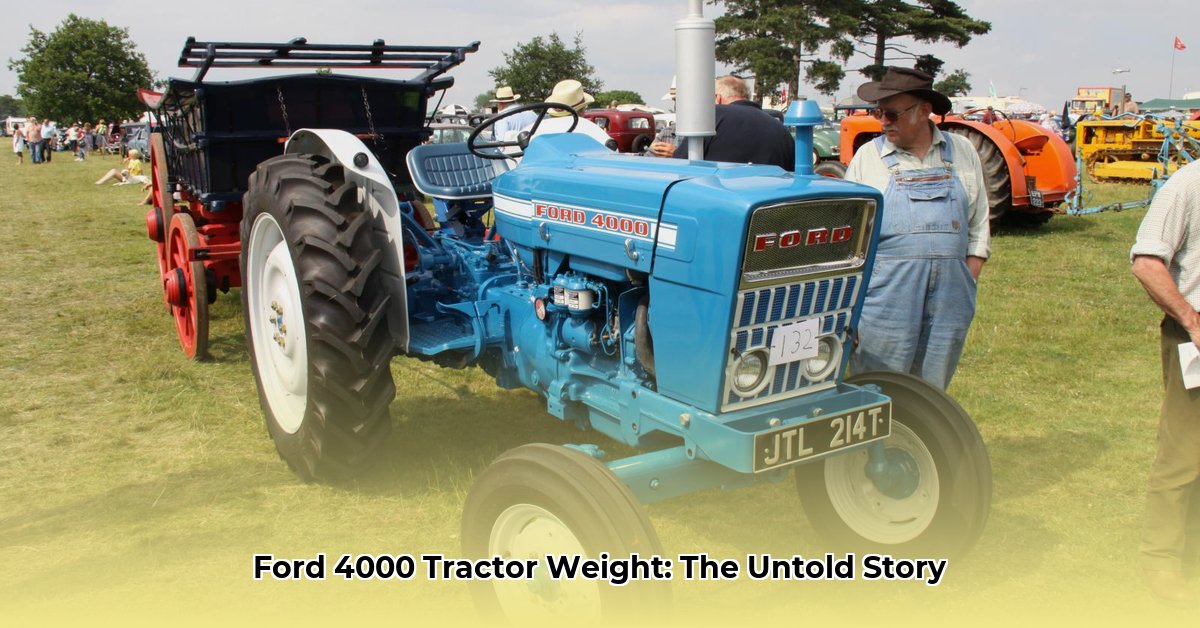
Understanding the Weight Variations of the Ford 4000 Tractor
The Ford 4000, a stalwart of American agriculture from 1965 to 1975, wasn't just a machine; it was a testament to robust design and adaptable functionality. However, understanding its weight isn't as simple as finding a single figure. The weight of a Ford 4000 varied significantly depending on configuration, a fact impacting its performance and handling. This guide delves into the factors influencing this weight variation. For further information on Ford 4000 models, check out this useful resource.
Beyond the Base Model: Factors Affecting Weight
Several key components contributed to the wide range of weights seen in Ford 4000 tractors. These nuances are crucial for collectors, restorers, and prospective owners alike. Let's break down the key factors:
Engine Choice: The engine proved a significant weight differentiator. The gasoline engine was lighter than its diesel counterpart (a considerable difference). The LP gas option also held different weight specifications.
Transmission Type: While subtle, the 8-speed and 10-speed transmissions each contributed differently to the overall weight.
Added Equipment: A front-end loader noticeably increased the weight, as did rear-mounted weights added for traction. It goes without saying that the addition of implements like plows or cultivators also added substantially to the total.
Fuel Level: A seemingly insignificant detail, the fuel level makes a substantial difference. A full tank adds considerable weight to the tractor.
Manufacturing Year: Minor design variations throughout the tractor’s production run (1965-1975) likely led to slight weight fluctuations between models of different years.
Weight and Performance: A Dynamic Relationship
The weight of your Ford 4000 directly impacts performance. Heavier configurations, naturally, provided superior traction and pulling power ideal for heavy-duty tasks like plowing tough or rocky soil or pulling heavy trailers. However, this increased weight resulted in diminished fuel efficiency and a potential for increased soil compaction. Conversely, lighter configurations were more maneuverable and fuel-efficient but lacked the power for heavy-duty applications. This trade-off presents a crucial consideration for owners and potential buyers.
Determining the Weight of Your Ford 4000
Pinpointing the exact weight of a specific Ford 4000 can be a challenge. Original brochures and owner's manuals are the key, but obtaining these documents in good condition often requires dedicated searching. Online forums dedicated to vintage tractors and collector's communities often prove invaluable, acting as repositories of shared experience and knowledge relevant to these weight specifications.
Key Takeaways: Weight and its Impact on the Ford 4000 Tractor
- Variability is Key: The Ford 4000's weight wasn't fixed; it varied dramatically depending on the chosen engine, transmission, and added equipment.
- Performance Trade-off: Heavier configurations provided superior pulling power but reduced fuel economy, while lighter ones were more nimble but less powerful.
- Resourcefulness is Crucial: Pinpointing your Ford 4000's exact weight requires resourcefulness, utilizing original manuals and online collector communities.
Optimizing Fuel Efficiency in Your Ford 4000
The Ford 4000, while a robust machine, wasn't renowned for exceptional fuel economy. However, implementing several strategies can significantly improve fuel efficiency. These guidelines not only improve fuel economy but also contribute to the longevity of your tractor.
Strategies for Improved Fuel Efficiency
Regular Maintenance: This is paramount. Regular servicing, including clean air filters, a clean fuel filter, and regular oil changes will significantly impact fuel efficiency.
Engine Speed Management: Avoid unnecessarily high RPMs. Match engine speed to the task at hand; this requires experience and an understanding of the tractor's power needs.
Fuel Quality: Use high-quality diesel fuel. Using lower-quality fuel can reduce engine efficiency due to incomplete combustion.
Tire Pressure: Ensure proper tire inflation. Under-inflated tires increase rolling resistance, necessitating greater power and increased fuel consumption.
Minimize Idling: Reduce idling time as much as possible. Idling consumes fuel unnecessarily.
Weight's Indirect Influence on Fuel Consumption
While this section focuses on fuel efficiency, remember that the Ford 4000's weight does indirectly influence fuel consumption. Heavier configurations, whether due to added equipment or modifications, require more power to operate, thus increasing fuel usage. Therefore, maintaining a reasonable operating weight can contribute to better fuel efficiency.